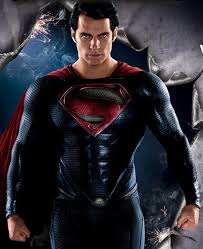
Tuesday, July 23, 2013

NO CONFIDENCE - Warner Bros. Won't Let Superman Go It Alone For Next Outing


Well, it's happened.

Our present has fulfilled a prophecy made in the past by a Will Smith movie that depicted the future.

If you never saw Smith's 'I Am Legend', or even if you did, chances are you missed the shot of a squalid, overrun Times Square in the zombie apocalypse time of 'fore showing a movie marquee with the iconic Superman 'S' layered over the equally iconic Bat of the Dark Knight. This background gag was good harmless fun at the time; a lark for the fanboys and fangirls who recognized the overlapping sigils for what they were and required no further explanation. The filmmakers, it seemed, were geeks like the rest of us, or at least that's what they were trying to tell us in the midst of a film that was mercilessly curb-stomping one of the most revered works of speculative horror ever penned.

SEE?! - 'I Am Legend' (2007)
NO, REALLY, SEE?! - SD Comic Con


Now that throwaway joke has been realized here and now in the form of Warner Bros.'s announcement at the San Diego Comic Con that the next 'Man of Steel' will be a buddy picture with the Batman. Now, we comic aficionados are easily as suspicious as sailors, and we might begin to wonder if it wasn't an omen of Galactus-size proportions that the first titillation of a real-life 'World's Finest' appeared in a movie about the end of the globe as we know it.


Alas, I'm too old to still be a simple reactionary, flying off the handle and portending Ragnarok simply because I know the premise of the next 'Superman', and it's tedious to go on for a few pages about a movie whose title isn't even known. Besides, if I start using my A-material now I'll run out of original gripes before I actually see this new film and have to review it in earnest. No, this piece is just a meditation on my gut reaction, and even that can't be said to be wholly unique; already I've read many sources who think exactly as I do. I don't need to restate what they have already said, but in my reverie it might happen anyway.

Who am I kidding, of COURSE it will.

Seriously, the bricks and mortar of my feelings on the SDCC announcement can actually be found in my previous posts, first about 'Man of Steel' and then about Hollywood's addiction to hash...re-hash. In a microdot: I wasn't impressed with Snyder's take on Superman, the studios have hitched their wagons to superhero flicks as if they were a flock of golden geese, and anything proven to work once can, according to the physics of their boardroom Q-universe, be rebooted again and again for future exploitation anyway, so critics be damned and pass me the moneybag.

But is it really that simple? On the surface the decree from Warner at the Comic Con seemed like a teen dream given form: a team-up picture featuring the two most recognizable superheroes of all time, soon to be emblazoned on the big screen by handlers of respectable pedigree and a nine-digit budget to burn. The announcement was made in a carnival atmosphere and blew away just about all the other news to come out of the event, bar none. But this strategy – for it is a strategy, and as shrewd as any you're likely to see this side of a RISK board – may be more telling than it seemed on the surface. Anyway it certainly gives pause to those of us with a jaundiced eye toward the studio system and not just a little pessimism about the minds of the bean counters by whose word these movies live or die.

The theory, then: 'Man of Steel' did well, but it didn't do well enough – not with the critics, not with audiences, and not with the audience's dead presidents, who failed to fill Warner's coffers as high as Warner wanted. Ol' Supes is going to need some help. And he 's gonna look...kinda like a giant bat.


Maybe after six films the studio heads have finally realized the old stories have a ring of truth to them: Superman is not a sure thing at the box office. If the Sacred Reboot failed to tickle the $1 billion mark, what hope can there be for a stand-alone sequel? Or two? For while Kal-El's newest adventure can rightly be called it a hit, it has NOT, to date, been the mega-hit so many assumed it would be. According to BoxOfficeMojo.com 'Man of Steel' had collected just over $285 million as of July 22nd. The shooting budget for the film was $225 million. Now, in 21st America, $60 million in pure profit isn't even enough to keep the lights on at night. Warner has to look overseas, where 'MOS' added another $350 million to the booty total, but only after experiencing a precipitous sales drop from the peak of opening weekend. North of $600 million is nothing to sneeze at, but it ain't Avatar money, or Avengers money. Hell, it ain't even Iron Man 3 money. This must be cause for confusion, as Superman could probably kick the crap out of Iron Man, the other Avengers, and the Na'vi without even losing any bars in the process.

The suits are awful people, but they know their numbers and their Marketing 101, and while they may not listen to a single good idea before or during the movie-making process, they clearly aren't deaf to the potential lessons of a subpar aftermath. At best the situation is that the Snyder/Goyer/Nolan effort was 'off' in some way, a way that made it fail to connect with audiences, generate good word-of-mouth, and encourage repeat business. At worst – and not exclusive to my last sentence – is the very real possibility that Superman just can't cut it on his own. Maybe he's too dull. Maybe his squeaky-clean view of the world no longer gels with our post-9/11 planet. Or maybe the very reckoning I predicted in my 'Reboots and Remakes' post a little bit back came true far sooner than I thought; maybe audiences balked at the idea of the Man of Tomorrow being subjected to Goyer's dial-a-script approach to capes and masks.

Does it matter? Sadly, it does not. In a fair world, a world Superman would actually like, he'd be given another chance to stand on his own red-booted feet and try for another grand slam. But that is a luxury Warner Bros. apparently can't afford. So they're turning to the closest thing they have to a sure thing: the Dark Knight Detective, a man with no superpowers who nonetheless did something Superman couldn't: make them all a little bit richer than they might have been otherwise.

This could all be bullshit, and I and the others out there who think this is a sound theory may be miles off base. I'm going to stand by it simply because we're unlikely to get full disclosure from the studio anytime soon. I'm more concerned with what this will do to my good friend, the Batman. If this 'World's Finest' flick is indeed going to serve as a springboard to a new Bat trilogy, as it certainly will, then we'll be looking at no fewer than four new features starring Gotham's winged defender inside of ten years. This, of course, is hot on the heels of the Nolan years (2004-2012), and as thorough and exhaustive an exploration of the Batman mythos as ever will likely make it to the big screen. And not to pluck the same string yet again, but it's good odds if not near-certain that David Goyer will be writing ALL of them.

This has me very worried. This kind of inbreeding and cronyism brought down the Dutch kings, after all. How many bastard children must Goyer sire before the three-act gene pool hits rock bottom? And what will become of the source material the powers-that-be are supposedly mining for 'inspiration'? 'Batman Begins' was a solid effort, but the bits and pieces culled from 'Batman: Year One' were so watered down they lost all significance – no Gordon parallel narrative, no pandemic of police corruption, no fistfight with the S.W.A.T – was what Goyer did to Miller's extraordinary work really much more than pulling ammo off a dying soldier so others could keep up the fight?

The announcement at SDCC did it one better: a dramatic 'reading' of from Book Four of no less a holy tome than 'The Dark Knight Returns', the 'I want you to remember...' speech from Batman as he finishes trouncing Superman. I found it insulting. They are NOT – by Snyder's own admission – adapting TDKR into a film, and while it is an absolute given that Wayne and Kent will exchange blows before teaming up, they most certainly will not be battling in anything even remotely close to the context in which Batman delivered those inviolable lines. For God's sake, they can't even show blood in a PG-13 movie, and yet they had the arrogance to quote Miller directly as if they were even capable of doing justice to that history-changing fight, to say nothing of the sheer narrative weight of TDKR as whole. Every fanboy and fangirl should think back to that blink-and-you'll-miss-it moment in 'I Am Legend' and feel their back go up, if only a little bit.

Time will tell. Encouragingly, there have been several articles from major media sources lately about the dearth of hero flicks and the specter of audience fatigue. I'm reminded of the way animals always know to flee the area before an earthquake hits. In the meantime I refuse to feel sorry for Warner Bros. and their plight. They will be one giant among many in the box office breadline of 2015, and they will have the Return of Joss Whedon and the Galaxy Far, Far Away with which to contend, among others. But that, my friends, is a story for another time.


Friday, July 19, 2013

'Pacific Rim' - This IS Your Old Saturday Morning Cartoon

I meant to do that...
Some advice for posterity: before writing a review for a film like 'Pacific Rim', you must, I think, consider seriously just what kind of review you wish to write.

You could lay on for 2000 words and give a fair shake to character, style, and plot; delve into the themes; scour for idiosyncrasies; examine the pacing, execution, and emotional impact...or you can aim the sextant straight down the horizon until you reach true noon and concede you were there to watch a monster movie. It is to this latter school of analysis I must defer, and I would humbly suggest to anyone watching this movie they do the same; you will save yourself a great deal of time and any number of grateful brain cells.

And you'll end up having a blast, too.

It's been an old-timey gas reading other reviewers, both professional and not-so-pro, who have insisted on applying the former school – a generic 'good/bad' rubric – to 'Pacific Rim', dimly scrying through some Philosopher's Stone of cinematic aesthetics against which any movie may be righteously judged. Some of these writers seem to consider their analysis a matter of such holy import that they've forgotten just what exactly it is their writing about. 'The characters are bland,' many bloviate, 'the dialogue is cheesy and the script is a cliché!'

Yes, Virginia, it's a movie about giant fucking robots fighting exo-dimensional beasts the size of the Chrysler Building; if it spoke to my soul I'd start worrying about my oxygen supply. And then there's my personal favorite, one I've seen repeated many times: “Because of such-and-such or this-and-that 'Pacific Rim' falls short of greatness.” I'll hand out my home address and oatmeal cookies to anyone who can show me the scale by which these films are assessed for greatness(!). I'm not deaf and dumb to other's well-intentioned bitching, especially if it's articulate bitching; I'm just surpassingly ready to call a spade a spade on this one and have my fun.

So, submitted for your approval, the most unpretentious movie you will see all year, a flick no one would race to describe as 'intelligent' yet at no point insults your intelligence; a back-slapping, arm-punching labor of love from Guillermo del Toro, the south-of-the-border wackaloon who brought us Hellboy and Pan's Labyrinth. Seems the Earth has been invaded by a very patient race of colossi who are content to attack one at a time, destroying everything in their path until finally repulsed, only to be succeeded by a stronger, more adept replacement that manages to inch humankind a little closer to the apocalypse with each fresh assault.

The wormhole through which the jerkface leviathans emerge is located somewhere in the Pacific, meaning every country with a coastline is fair game for a one-monster D-Day whenever the clock reaches Oh Shit time again. Humans have responded with the Jaeger Program, employing 300-foot tall humanoid war machines that can beat the creatures at their own game. The robos are too unwieldy for a lone pilot to interface with all the advanced hardware, so control is achieved tandem, each operator acting like a hemisphere of the brain. To work in sync pilots are neural linked via a mind-meld called The Drift, which, like all forms of on-screen brain activity, is depicted by a hodge-podge of choppy jump cuts shot through a blue filter. Anyway, the Jaegers work great until the creatures wise up.

Now at this point I can simply stop writing and you'll be as equipped as you're ever going to be to make an informed decision as to whether or not you actually want to see this film. If you're on the edge of your seat right now waiting for me to get to the point, then you've missed the point. Robots fighting monsters. That's it.

And that IS point. And that's the POINT of the point. The joy of a movie like 'Pacific Rim', you see, is going in with zero expectations and discovering that you're actually having a hell of a good time. The even more profound joy is in realizing you're having a good time and that the portions of the film that do NOT explicitly feature robots fighting monsters are actually not terrible. With a premise that could easily have filled two hours with nothing but special effects and claimed your cash anyway, del Toro cared enough to book some capable actors and pen a script that playfully and – I'll say it again – lovingly plums the rich and storied archetypes of monster movies. All the staples are there, right where you'd expect them: a brooding hero, a wily girl, a stern mentor, a grim prelude, a portent of doom, a do-or-die climax, a happy ending. Add some chest missiles and a dash of Ron Perlman, garnish with some choice sci-fi goobledygook and sip for two hours. There are worse ways to ride out a heat wave.

But make no mistake, there is some intelligence to be found in 'Pacific Rim', at least as it concerns the script, which is careful to address most of the logical stumbling blocks inherent in monster movies. We are told early on why, for example, the good guys can't simply destroy the dimensional rift with a nuclear depth charge. A little later we get several minutes devoted to solving another potential quick-fix when we discover (at the same time as the hero) that building giant walls to keep the beasties out won't work, either. Such details are small but they're much appreciated; just because it's Rock 'Em-Sock 'Em Robots writ large doesn't mean it has to be, you know, stupid.

But in case you're wondering, 'Pacific Rim' doesn't phone it in for passable character content, either. Admittedly, I'd hesitate to use the word 'depth', but it makes more effort than the bare minimum to shore up stock characters and their predictable arcs with some genuine formative moments and thoughtful flashbacks, adequately serving as the connective tissue for their evolving relationships. The script employs The Drift as both device to inch the plot along and as a shortcut to real (and time-consuming) emotional payoff. Family bonds, be they biological or surrogate, take numerous cracks at the thematic pinata: father/son, father/daughter, and brother/brother each have their moment to shine courtesy of The Drift and its habit of joining the pilot's thoughts and feelings into a volatile grab bag. Idris Elba, a perennial favorite of the Great Underused Non-American Actors, does well with what he gets, playing the stoic last survivor of the original Jaegers forced to improvise when the program is faced with obsolescence.

Oh, and did I mention that it's better than 'Man of Steel'? Listen well, all o' ye, and I'll tell you why.

You don't have to suffer through a marathon of Merchant and Ivory snoozefests to realize the emotions movies elicit in us fall into two broad categories: real and hollow. In any movie depicting human suffering, our emotional response is dictated by the response of the characters and how they react to their peril and the imperilment of their loved ones. Bad or non-existent reactions elicit a hollow emotional response in us; good reactions elicit a genuine response. In 'Pacific Rim' we see skyscrapers annihilated, we watch tall towers collapse and see numerous harrowing escapes. We see much the same thing in 'Man of Steel'. Yet in 'Pacific Rim' that destruction and its consequences are never presented as anything other than a genuine damn shame, a tear-tugger; the carnage is laid before us like a wounded bird, disturbing yet evocative, and thanks to some terse dialogue and careful reaction shots, the characters seem evermore burdened as a result; they respond to the horrors of their plight with real urgency. 'Man of Steel' gave us a Superman who cut a swath of violence through the heart of both Smallville and Metropolis and, frankly, looked like he could give a shit. And if he doesn't care, then why should we?

That's why it's better. The floor is open to dissenting opinions.

Cliched? God, yes, so much so you have to wonder if it isn't part of del Toro's plan to make us snort popcorn straight into our soft palates. The elite corps of Jaegers and their pilots are a smorgasbord of international stereotypes straight out of central casting: the Chinese robot is piloted by intensely disciplined triplets (because there's so many of them they use THREE instead of two, get it?!), the Russian Jaeger looks like a Transformer that had the shit beaten out of it at the Battle of Stalingrad while the pilots consist of a platinum-streaked femme fatale and a bearded goliath, and the Australian contingent is represented by two impossibly squared-jawed male models who look like they came late from a surfing contest. Caricatures one and all, but I say again, who cares?

'Rim' is far from perfect, even for a refreshingly self-aware piece of summer escapism. It can be slow at times, the appeal of Charlie Day for anything longer than five sustained minutes continues to elude me, and the finale utilizes underwater scenes as an excuse to do more gratuitous slo-mo. The end also seems anti-climactic compared to the spectacular six-giant brawl that caps the second act, but no one said this was easy. What's important is that the good far outweighs the bad, and the end dodges at least one sacred cow by going a different path with the relationship between the hero and his new, exceedingly fetching partner. Again, the respect in this flick 'twixt itself and the audience is happy to travel a two-way street.

So see 'Pacific Rim'. See it and buy the Blu-Ray and make it enough money so that they'll greenlight a sequel. Then in a few years time we can discuss how 'Pacific Rim 2' is superior to 'Man of Steel 2': The Secret of Lex Luthor's Gold.'*

*title tentative

Tuesday, July 16, 2013

'The Ocean at the End of the Lane' - Gaiman's Latest a Subtler Foray into Childhood Whimsy


I met Neil Gaiman, many years ago. He seemed a very decent chap. He had a firm handshake and a sonorous voice cut with that pleasant Hampshire accent, and he managed to be engaging with me even though he had just pumped paws with three hundred people in line in front of me. His grip only spasmed once for all the signing he had done that day, though behind the drawn, slightly hangdog eyes of the ethereal wordsmith I detected some very human fatigue.

Under the circumstances, I couldn't blame him for looking tired. Hell, he was the center of the adulation that day and I actually felt sorry for the guy. Mr. Gaiman is the personification of the phrase 'a victim of his own success', though he has been heard to remark it's more like being 'loved to death'. Yeah, I was Number 300 (give or take) at an event where 900 people showed up in a venue that was maxed out at 500. It was, in the words of the Buddha, 'a fucking circus' (I'll double-check the source on that quote).

Why do I mention this in what is ostensibly a book review?

It is NOT to bitch about Gaiman's legions of new and fair-weather fans, his groupies who treat him like a literary rock star and only love him for his recent stuff. Nor is it to play a hand of fanboy one-upsmanship, recite the Sandman volumes clogging my bookshelf or declare 'I read him when no one knew him.' If I could travel back in time to the very birth of pettiness in geekdom I still would arrive too late to smother the first douche who said “I saw him first, so I'm a bigger fan.” Not the route I'm going to take.

No, I mention it because when you can count on creating a fire code violation every time you show up to sign a book, you might have reached that plateau for which every author strives but so few reach; the level where you ascend from writer to Institution. Being an Institution has perks, ones that Mr. Gaiman is enjoying in abundance right now: fabulous commercial success, crossover appeal, non-stop demand, and a built-in base of doggedly loyal disciples who very likely will buy whatever you manage to put between two covers. But Apollo was the god of disease as well as the god of healing, gentle readers, and The Institution has a downside in very much the same vein. The Institution is a hungry baby, and She doesn't like too much variety in Her diet. As a writer who has achieved stunning success with a winning formula, the temptation to repeat that formula and try for another golden egg with an identical strategy must be overwhelming; the temptation and the pressure – let us not forget that – from publishers and advertisers and other interested parties all fighting for the teat. But is it fair to accuse Mr. Gaiman of submitting to the quick fix?

On one hand, 'The Ocean at the End of the Lane' is vintage Neil. It is a cozy, homespun parable of wonder and curiosity garnished with poignant life lessons as only an incorrigible 7 year-old narrator can provide. It mines a mixed bag of regional lore and obscure myth judiciously re-imagined and turned five degrees sideways by the author's boundless ability to make the everyday fantastic (and vice versa). And it is seeded with innumerable little details so carefully rendered and artfully conveyed any one of us could find a memory in our own childhood that parallels the hero's experience. It is also, I think, a more mature tale than a lot of folks seem to realize, easily as traumatic and melancholy as it is cordial and funny, and while many are quick to dismiss it as a 'kid's book', central to the narrative is the decidedly depressing theme of memory: what it is, how it works, and how what we think we remember is ultimately very, very subjective. It is a story bound to make you consider your own mortality, as, I imagine, Neil did when he set out to write it. This is 'Lane's greatest strength, and the chief argument against critics who say Gaiman is starting to repeat himself, for this book tackles weighty issues that, while present in his other works, have never appeared quite so mellow and ripe as they do here.

On the other hand, this does feel like familiar territory. 'Lane' reads like yet another entry in Gaiman's American Gods lexicon, delving heavily into the same devices found there as well as in his follow-up Anansi Boys. Again we're presented with the idea of supernatural beings who may or may not be gods (but who are certainly sprites, spirits, or similar pseudo-divine beings) anchored to our world by humans (who still believe in them in one capacity or another), and who still possess awesome power which they exercise in odd and obtuse ways, always under the radar of ordinary folk, save the protagonist who is in on the whole thing. As with many of Gaiman's works over the last decade or so, the story is told from a child's perspective, and as such the prose is straightforward and fairly simplistic, with paragraphs of lean sentences describing mundane things. It reads very much like a short story, which is no accident: Gaiman admitted it began as exactly that, and only later blossomed into a full manuscript after some massaging. The problem, if it really could be called that, is that it reads a lot like many of Gaiman's other short stories, and is shy of content most folks would consider trailblazing. Indeed, one might expect to find something like a Bizarro version of this story in any of Neil's existing collections. The hungry baby knows what She likes.

So what of this old wine in new bottles? Well, on the surface, squat. If Gaiman wants to write still another fairy-tale-with-a-twist, even one that reads like it came from his American Gods sketchbook, that's his prerogative. The laws of capitalism state that I'll only be free to criticize him on his story choices when I'm richer off my writing than he is off his. His afternotes and acknowledgements, which are as entertaining to read as anything else that spills from his winsome pen, speak of a genuine love for this book and a bone-deep impetus to write it; it was a process, no surprise, that involved a great deal of family, friends, nostalgia, and the author's own childhood memories. If we could all tell tales that come from such an honest place, what a joyous and more profound understanding for each other we might have. I'm not prepared to dismiss 'Lane', as some have, as a quick buck. If Gaiman was tumbling into the twilight of his career, popularity diminishing, debts accruing, I might change that assessment, but considering the man's schedule is booked up between now and the Rapture, I don't think cashflow is something with which he is painfully concerned.

I would love to see Neil explore some truly adult fare again and pen something else akin to American Gods or even his freshman novel, Neverwhere. This is a sentiment echoed many times by many people, and here is where I fear, in my learned distrust of Business with a capital 'B', that 'Lane' might have been quietly manipulated by the Man Behind The Curtain. For every time Gaiman writes anything longer than a grocery list it is accompanied by months of fanfare and a punishing multi-city flog that more resembles a concert tour. The carnival atmosphere of these events has grown with every major release so that now a 'simple' appearance and reading is anything but simple and the chief concern is crowd control. That nook-ish atmosphere where an individual fan might enjoy an intimate minute or two with the author is a thing of the distant past, at least where Mr. Gaiman is concerned, and anyone looking for one of those coveted handshakes (and duly witnessed John Hancocks) is committed to nothing less than an all-day excursion that may involve copious body heat, trail mix for dinner, and peeing into portable vessels.

'Heh heh', you titter nervously. 'Is he just being funny?' Go to a Gaiman signing and find out for yourself.

The point is, the scope and narrative 'weight' of Mr. Gaiman's latest offerings (I'll include Anansi Boys in this statement) have not necessarily been in proportion with these ever-burgeoning levels of hype. 'Lane' is fun and pleasant read, but it is not the next American Gods. Neil never claimed anything to the contrary, but the fanfare that follows him with every step he takes these days is making a lot of folks assume otherwise; the unfortunate consequence is backlash, a feeling of being 'duped' by the PR machine that promises gold with every $30 punch. Unscrupulous back room machinations or sheer populist momentum? Who knows.

With 'Lane' I've fielded a variety of opinions that are just so much grumbling; a bemoaning that Gaiman has 'changed' or that he's turned his unique brand of whimsy British yarns into a full-blown industry with fat dollar signs at the end of the rainbow. This is disingenuous and petty. Perhaps Gaiman has grown comfortable with his winning formula and perhaps, like an overwrought mother preoccupied with work, he has fed the Baby from the same jar once too often. That may spawn newfound caution in his gushing fan base and prompt some who would buy his material sight-unseen to hesitate come his next release. That is, I think, a good thing for all concerned. The alternative is that Gaiman goes the way of Tom Clancy or James Patterson, driven by markets instead of the Muse, pressured to pump out more and more rushed, sub-par content in the name of filling an unfillable void.

And do any of us want to see that happen? I think we know the answer to that one.

In the meantime I would encourage everyone to look a litter deeper into 'The Ocean at the End of the Lane', and to dig for its charms. Maybe it's just that I am no longer the teenager I was when I started reading Mr. Gaiman, and maybe it's also that Mr. Gaiman is no longer the thirty-something he was when he embarked on his first novel, but 'Lane' is a deeper and more subtle work than what shows in the surface, and it is the 'bookend' narration of the protagonist – as a much older man struggling to recall the 'real' events of the story – who speaks to us here. The time may come when the man in the ever-present black jacket will gift us with another tentpole tome, but until then let's enjoy his singularly wonderful ability to make us feel like that kid gazing up at the stars and wondering What Else is out there. 

Friday, July 12, 2013

War of the 'RE's: Remakes and Reboots Are Now Hollywood's Most Destructive Habit


Watch your step here in 2013. The franchise is king now. And the franchise doesn't like newcomers. In fact, the franchise is so adverse to virgin flesh that anything implying 'new' has become a hated thing; a darkling creature to be reviled, mistrusted and scorned like Judas, pure anathema.

Oh, surely you exaggerate, sir.

Do I? Did you ever think, even at our most charitable, that we would be holding up disastrous bombs like John Carter and Battleship as MARTYRS, casualties of an insidious depredation even worse than the short-sighted inanity that spawned them? Yet it is so. Those aforementioned shits-in-a-hat are the VICTIMS now, innocent bystanders in the campaign to rid the celluloid empire of anything remotely original. Make all the cracks you want about Rihanna trying to act, slapdash and spirit-robbing visuals or poor hapless Taylor Kitsch (whose name even sounds like a failed film, as in, 'Geez, that rookie director totally kitsched that movie'), but they were part of noble – yes, noble! – if ill-advised attempt to break ground on fresh Hollywood real estate and buoy up a box office weighed down with old news.

Utterly RIDICULOUS statement, right? You shan't reel me into your cantrip, sir, for I know those films were mere flummery. But bear with me. I know, it's amazing I can even get away with writing that last paragraph, considering neither Battleship nor John Carter were original works. But they are two recent parts of an otherwise unconnected triad of foolhardy attempts to make something (technically) old (sorta) new again. The third and latest (and, I suspect, last) holdout of the non-original originals, The Lone Ranger, just ate it at the ticket counter and is defying both math and physics by 'generating negative dollars', as one anonymous source put it.

'Nother words, the Delorean didn't hit 88, Doc. Consequently the suits in the studio Tower(s) of Mordor are more terrified than ever of anything that isn't compulsively clone-able; mere sequels are now reserved for dangerous progressives whose shades will not darken their ichor-splattered doors.

The film industry appears to have borrowed a page from its older, more long-winded brother in the Entertainment family, publishing. Publishing, particularly fiction publishing, has mutated – please note I pointedly avoided saying 'evolved' – into a long game, a ten-year-plus plan that eschews one-shots and stand-alones in favor of serial installments. Conservatively a 'series' might refer to a trilogy, but the surer bet now is even more – think five or six, maybe more, all spawned from the same source material. A Nebula-award winner told me not long ago that new writers especially need to think less about their debut novel and more about debut-plus-two, and to be prepared to tuck in for a long sit on one topic should a publisher express interest. Why? Because they want to find something that works and squeeze it for every red cent, that's why. That subject is another post for another time (because it's scary and sad and is worthy of discussion), but the general idea also applies to what is going on right now in the business of making pictures.

How did it come to this, as if we media-savvy journeyers didn't already know?

Movies are ludicrously expensive to make these days. As a kid I can remember Newsweek balking at the then unheard-of price tag of $92 million for Terminator 2: Judgement Day. Today that's considered a quaint sum indeed; a down payment for a decent cast and a crew of sober drivers, perhaps, or enough for three or four rom-coms starring Jennifer Garner. But these days nothing under nine figures will suffice for a flagship summer blockbuster or an effects-driven event piece. The flipside, of course, is that the last decade or so has given us some of the biggest box office RETURNS – think 'The Lord of the Rings' trilogy, 'Avatar', 'The Avengers', and, a surprise for me, 'Iron Man 3', all now members of the coveted One Billion Worldwide Club. On the surface it appears the Universe is in balance, right? Pricer flicks, bigger returns.

But somewhere along the line it all got out of whack. Fewer and fewer films are turning any profit at all, or, even when profitable, STILL aren't making enough to keep the studio in the black when weighed against the year's failures. Because the movies that bomb often cost as much or more to make as the ones that triumph.

Blame the rising cost of advertising (including hip, high-tech enticements like viral web campaigns), skyrocketing labor demands, travel expenses, ever-widening online and cable competition, and the asking price of Hollywood A-listers, which for many have mushroomed disproportionately with their audience draw (looking at you, Johnny Depp). Cartoons? Long regarded as free money by studios who knew when and how to release them, animated features have become almost as risky, given the massive workload the all-CGI productions now require, and the added drain of studios INSISTING on using known stars with huge rates as voice talent. Plenty of blame to go around. Bottom line: in a world where everything from a glossy period piece to a gross-out comedy is a potential leech on a studio's pocketbook, the only way the guarantee a – wait for it – 'reasonable rate of return' is to have one or two MEGA blockbusters with their seven-figure margins in the tubes for inevitable deployment.

These super-flicks are like great white sharks: huge, ravenous, requiring constant forward movement. They must be pumped out with assembly line regularity or risk being sideswiped by another over-budgeted leviathan during prime seat-filling seasons. Missing a target weekend or crucial holiday window is akin to losing your spot in the Apple Store Genius queue: it dooms the hapless slowpoke to mediocrity and slow death. It also doesn't leave much room for innovation, invention, insight, or anything that might make the film feel somehow – God forbid – different from the multitude of look-alikes invading the screen every year.

So the franchise has become the Favored Son. Find a property with proven appeal and repackage it, with minor variations, again and again ad infinitum. THE REBOOT! And to do it frequently and fast we can't wait around for the next genius screenwriter with odd-colored socks and peanut shells in his hair to give us another 'Citizen Kane'. No, we have to mine the past for all it's worth and turn new scripts out of old material on a week's notice between the animatics and the table read. THE REMAKE! And all who heard it rejoiced.

You need only take a cursory glance at the recent offerings to get a sense of how off-the-deep-end studios have become in applying this philosophy. Stuff that wasn't very good to begin with is being reconstituted into hideous offspring like Ripley in Alien 4, stuff with limited appeal that was carried by fads or the magnetic personalities of the star – Total Recall is one that leaps from the top of my head; how is Colin Farrell even a shade of Arnold Schwarzenegger for audience draw?! Campy staples from the 80s are being remade with actual gravitas (there's a new RoboCop coming down the pipe...I WON'T buy that for a dollar!) and period-relevant fare like Red Dawn are being clumsily regurgitated to play off 21st century fears...of North Korea.  Oh, but not the North Korea, but rather a North Korean splinter group. Ah, the splinter group...the silver bullet in the American political correctness arsenal. And the terrifying thing is that we're still in the beta testing phase of this New World Order. In another decade or two what we're seeing on screens now could be thought of as only the vanguard of the Age of Rehashed Shit.

Superhero movies are the new bread and butter, of course. I'm not the first writer to take note of that; I'm merely the sexiest. Everyone loves a good comic book movie now that the land has been tilled enough times. Sure it was nervous days for 20th Century Fox when they greenlit the original X-Men, and the first Spider-Man was probably shakier ground still, considering how much it cost in the long-long ago of 2002 dollars. But now that those trailblazers have cleared the path, it's open season on spandex. Hugh Jackman, an unknown in the states at the turn of the millennium, will be appearing for the SIXTH time as Wolverine this summer in The Wolverine, a NutraSweet version of the Claremont/Miller miniseries, to be followed in short order by Number Seven when Days of Future Past arrives next year. I'm happy for him; he's found a niche and done well with it.

And Spider-Man? Oh, ho hooo, he pulled the real hat trick, didn't he? Yes, the Webbed Wonder grunted out an All-Different, Totally Fresh, Newly Relevant, Completely Updated franchise reboot a scant decade after Tobey Maguire (who's either 38 or dead by now, I can't recall) first suffered for his art by cinching his genitals into the familiar red-'n-blue unitard. For those of you who missed The Amazing Spider-Man, you can simulate the experience by watching the '02 Maguire movie on mute and substituting Andrew Garfield's stammering dialogue with a track of Dustin Hoffman from Rain Man. It wasn't bad, I just liked it a lot better ten years ago.

I'm lying. It was much, much worse than the one ten years ago and I didn't like it at all. Ha!

But this will be a trend for the foreseeable future: hero flicks on the Decade Standard: three movies in ten years, followed by a 18-24 month cool down, followed by a reboot that will simply tell the same tale again with cursory and largely cosmetic changes, helmed by some pliant film school schlub who will do what he's told and peopled entirely with Hot Young Things looking to buy their first mansion. Why? Fortune and glory, kid. Fortune and glory.

If it comes to that. For there are already some cracks in the foundation. Some, I'll admit, are only theoretical at this point, but the writing is on the wall. Audiences are not exactly as stupid as the studios seem to think they are, and I predict that John and Jane Theatergoer are going to tire of this trend before it becomes the norm. The hope, for now, comes from behind the lens.

There is already a schism amongst filmmakers, many of whom seem perturbed by the new culture of franchise-worship, and others who are obviously torn over which side of the fight they're on. Box office gods Steven Spielberg and George Lucas have turned into oracles, predicting a future of $50 movie tickets and envisioning scenarios where a single misfire – one big-budget flop – will checkmate an entire studio and bring it to ruin. Spielberg pointed to the success of NetFlix original programming as an indicator that moviemakers and their audiences will soon be looking for more economical ways to both make and enjoy quality efforts that don't involve leaving home or laying out an Alex Hamilton for a small popcorn (perhaps even more terrifying, he suggested his stellar period piece Lincoln almost didn't get made out of fear that the multi-Oscar winning drama wouldn't be enough of a draw).

Steven Soderbergh has likewise publicly decried the new studio philosophy, noting that most suits won't touch a property that isn't guaranteed to make up its $100 million-plus budget OR cheaper fare that would not contribute to the year-end review in any meaningful way. Introspective character pieces? Experimental cinema? Can't be done. Soderbergh has sworn off making any more Hollywood pictures.

The Wachowskis went independent for last year's Cloud Atlas and undertook the most herculean effort to date to produce a super-budget picture without major studio support (though shot in English, it is technically considered a German movie). Without knowing the history of the production I can only speculate – but it's an educated speculation – that part or all of the reason they did this was because the film was 'high-concept' sci-fi that didn't spoon-feed answers to the audience. You know, the kind of movie that makes the accountants and business majors in the studio throne rooms feel dumb. Whatever your opinion of the film might be – I happened to like it – Lana and Andy did what they set out to do, and if they had to cut corners to make it work I can't see where they might have done so (with the possible exception of their labor force – if you haven't seen it, Cloud Atlas was done with an ensemble cast with each actor playing as many as six separate roles). The tragedy there is that the film barely recovered its shooting budget and is widely – if unfairly – considered a flop. Had it actually cleaned up at the box office it might have gone a long way to assuage the jittery suits who don't trust – have never trusted – intelligent sci-fi/speculative pieces. Alas, it was not to be, and the fight goes on.

Then, of course, there's cinema's current Neville Chamberlain, Peter Jackson. My gut impression of the world's Only Living Hobbit is that he rather could have done without the decree from on high that his return to Middle-Earth be elongated from two films to three. Doing so, to read some history on the subject, apparently required a great deal of scheduling callisthenics and no small amount of cajoling his cast to stick around for the many more months required to turn Tolkien's barely 300-plus page book into a trilogy. Now, as I already observed in a post back in January, Mr. Jackson clearly made the best of the situation and ended up having considerable fun, too, as these films clock in a three hours apiece and are aswim with whimsical minutiae and gooey fanboy esoterica. But in the end doesn't it just sort of feel like a cash grab? Here was New Line, after all, many times rescued from the dungheap of failed studios themselves, with a crew already in place (in New Zealand, no less, where you just can't get to from here), make-uped and costumed to a fair thee well, sitting on the closest thing to a real life dwarf horde of guaranteed ticket sales...tempting, no? I'm not inclined to point any fingers at Jackson and company and perhaps comparing him to history's greatest sniveling collaborator is too much. But considering Wing Nut Productions had to spend nearly a decade shopping around for ANY studio willing to produce the original LOTR films, it's telling that a dozen years later the powers that be couldn't wait to crank the dials to 11 on more twee men and their twee swords.

Now, will these strained and disparate points-of-view carry over to the moviegoing public? I think yes. Movies and politics have the same fundamental problem: you can't fool all the people all the time. Even casual viewers are remarking that films all seem the same these days, and art houses and foreign flicks are doing banner business even here in the heathen States. However, I think as long as the world continues to be twice as stupid and ten times as fucked as the most confounding fantasy we can throw into a projector, people will still pay money for what's put in front of them. But will it ever be enough?

The franchise will have its time in the sun and, like the Byzantines or the Hittites, will likely be remembered for the good things and its abuses glossed over. Things change, and not always for the worse. But when next you emerge from the darkened womb of your nearest IMAX with your wallet twenty dollars lighter and the horrors of the All New, All Different Highlander still reverberating through your brain, don't claim you were never warned.

Wednesday, June 26, 2013

Richard Matheson: 1927 - 2013


One of the greats has made it to the Summerland.

Richard Matheson was one of the true pioneers of speculative fiction and horror; a prolific workhorse who disguised his genius behind accessible, unpretentious prose and an empathy for the everyman. Thanks to 'Nightmare at 20,000 Feet' we can never get on a plane without worrying that there might be 'something on the wing!', but thanks also to 'What Dreams May Come' we know that 'there is more' waiting for us on the other side, too.


Unlike Ellison or Simmons or Gaiman or Bester, on whose works I have slowly sipped, my experience with Matheson's efforts have been more of a frat party chug; a fast-paced and delirious consumption of his novels, short stories, and teleplays that is, to date, ongoing and unlikely to stop.  Truly, I only met the man and his brilliance for the first time a few years ago, but I saw no need to take out relationship slow: his work is endlessly satisfying and refreshingly addictive. No one who's read the original 'I Am Legend' will ever be able to look at the Will Smith flick of the same name and find even an atavistic shade of its dark resplendence, its wrenching, unflinching examination of loneliness and private despair.  Likewise, anyone who thinks they know haunted houses hasn't spent anytime with the original, the best, the only Hell House.  Whether he was writing about a deranged department store clerk going mad before lunch or a coven of witches turned into weapons by the U.S. Military, Matheson made the unknowable known (whether we liked it or not) and was more than wiling to remind us that the monster was us all along.  He inspired Stephen King, who shamelessly and with pride admitted he outright ripped off Matheson on more than one occasion, not to mention a host of other writers (yours truly included) who jealously tried to mimic his elegant approach to the awful and awe-ful, always somehow falling short.  And for those of us who saw The Twilight Zone as a mirror held uncomfortably close to our own world, Matheson's ideas had no equal.

Many of his works were permeated with the precepts of parapsychology and the concept of the mind as an energy field that survives physical death, a notion that made his ghost stories frighteningly plausible and made his seminal 'What Dreams May Come' an inspiration to millions.  When you die, Matheson postulated, you are still the same person you were on Earth: the same hopes, the same failings, the same ambitions.  'Death,' he said, 'is simply continuation on another level' and Heaven is 'a state of mind', a place where one builds a house wrought from the good deeds and loving relationships fostered for all eternity.

I hope Mr. Matheson was right on that one, because I hope one day to visit that house.  Perhaps he'll have me for tea and we can discuss the finer points of writing.  I know he'll have a great view with a fine balcony and he won't begrudge me smoking a pinch or two of Balkan Supreme.  In the meantime I can only continue to quaff his great works at a fever pace, and hope for a day when I might be able to say half as much as he had to say with one tenth the aplomb.  

Sunday, June 23, 2013

'Man of Steel'

It tickles!

Though I am a seasoned veteran of John Byrne's seminal run of the Superman comic following the Crisis on Infinite Earths reboot (I still have first printings of the whole stretch, and woe unto me for not taking better care of them), my favorite interpretation of the Man of Steel was and remains the Mark Waid/Alex Ross's Kingdom Come. I loved it because among other things it imagined a doomsday scenario that wasn't just extreme, it was ironic: the world was going to be overrun by rampaging metahumans styling themselves 'superheroes' and it was up to Superman to either show them how to behave or else face an indiscriminate extinction event courtesy of us homo sapiens. Though every hero in the DC universe took part, the burden of setting the example fell to the World's Greatest hero because, well, hey, who ELSE could do it, right? It was a spectacular character study of Superman because it presented him with a quandary he couldn't solve with his fists – try as he might – or his usual laundry list of homespun, simplistic platitudes. This was a Superman who was frequently paralyzed with indecision, rueful of his actions and consumed by guilt when anyone – even those who would call him enemy – had to die for the greater good, a concept which (as then, so now) had become thoroughly subjective.  The only regrettable thing about this perspective-shifting story was that it was an Elseworlds tale, mere 'what if' whimsy relegated to the speculation of a trillion trillion alternate universes.

Whether or not Kingdom Come was one of the influences behind 'Man of Steel', the magic makers decided to tackle the weighty notion of Superman as a burdened savior straightaway, a young man's cross to bear rather than the product of age and wisdom and dangerous familiarity with his charges on Earth. But they don't just touch on it; they dwell on it, make it the one and only issue of the entire movie. The result is a finished product that bypasses virtually every other quality we've come to expect from stories of the Man of Tomorrow – action, humor, fun, wonder, romance – in favor of a meticulous deconstruction of the how one man might shoulder the weight of the world. It tries too hard, misfires frequently, and comes off mostly like a funeral dirge with a hefty sermon tossed in on top.

The script was penned by David S. Goyer, whose career is getting a tremendous shot in the arm thanks to his creds from Nolan's 'Dark Knight' trilogy. He's doing so well, in fact, that he's also been retained to write the 'Justice League' movie and its anticipated sequels whenever those make it to celluloid. I find this troubling; I simply don't like the idea of one man writing all these films. Goyer has obviously struck a rich vein with his approach to comic book flicks and the studios seem to have warmed to him (though they hated his earlier, more original fare like 1998's 'Dark City'), which makes me worry that he will be loathe to take chances and do anything daring that goes beyond the formulaic safe zone as he pumps out the hits. 'Man of Steel' is achingly formulaic, though the film mixes up the obligatory childhood scenes and formative moments by intercutting them with Supes as he appears today. It comes across as a very transparent attempt to mask the colossally boring first hour, a by-the-numbers checklist in which the audience is told, with minor variations, everything we already know about Kal-El's childhood, his parentage, etc. Watching it reminded me of the 'Spider-Man' reboot from last year, albeit not (quite) as insulting to the audience.

Not that their aren't plenty of opportunities to feel insulted, or lectured, or preached to. If you want overbearing subtext, folks, this is the World's Finest.

We have Krypton, with Russel Crowe at his mumbly best (still not a match for Brando) telling a room full of One Percenters that their neglect of the climate and insatiable lust for energy is dooming them. The coup attempt by General Zod is an excellent introduction to his character, although we lose five minutes watching his forces and the Kryptonian 'good guys' battle it out with ships and sigils we can't recognize and therefore don't know whether we should cheer or gasp when a giant cruiser explodes in the background.

We have Pa and Ma Kent, played by the always-good-when-he's-just-acting Kevin Costner and Diane Lane, still excruciatingly hot no matter how many laugh lines and age spots they put on her. They impart Morals and Values 101 on the adolescent Supes with a litany of teachable moments pressed straight from the cinematic cookie cutter. Still, it's saying something that the scenes in the Kansas heartland are actually the least sententious of all Clark's painfully extracted life lessons. Even the scene where his powers go haywire as a lad (making him look not a little bit like a special needs child in the middle of a medical episode) is a useful plot point for the third act, though we do see it coming a mile away.

We have Superman swatting down a military drone dispatched to spy on him, dismissively tossing it at the feet of the very same commander to whom he had earlier stated: “I'm about as American as they come.” SIDE NOTE: The commander's bemoaning of the drone's price tag after trillions of dollars of real estate have already been laid waste is one of several unintentionally funny moments.

Then, of course, there's the Christ imagery. This is already well-plowed earth, so I won't dwell on it. So much has been said of this already I will actually admit to being disappointed there weren't more comparisons to Jesus: of the six or more scenes mentioned by other sources, I saw only three or four at the most in my viewing. Having said that, those scenes are dreadfully, drastically over-the-top and about as subtle as a brick to the teeth. Yes, there was no reason for the Last Son of God – excuse me, Last Son of Krypton to mention he is 33 years old at the time he begins his ministry – er, career (as a rule superheroes never mention how old they are) but ol' Kent manages to sneak it in nonetheless, the only reason being so even the dimmest of bulbs can arrive at the conclusion that a forced-perspective shot of a stained-glass Jesus (at Gethsemane no less) and a blatant in-flight crucifix pose hadn't already driven home.

But if Superman is Jesus, does that make Zod the Devil? Not in 'Man of Steel', and not the way Michael Shannon portrays him, and here we come to one of the truly bright spots in 'MOS'. Zod is a lot of reprehensible things in this film, but he is not evil incarnate. From the beginning he comes across more like a maligned patriot, a tunnel-visioned warhorse who uses abhorrent means to pursue what is actually a morally defensible goal. He wants nothing more than to save his race, same as Jor-El, same as anyone in his position would want. His revolution in the film's opening moments is the product of desperation more than anything else, and when Krypton implodes despite his best efforts you can feel genuine sympathy for him. We learn that everyone born on Krypton is engineered from birth to fulfill a specific cause; as a warrior born to defend his people, Zod is following the compulsion ingrained in him by thousands of years of genetic conditioning. When he decides to make Earth his new Krypton he is implementing a last-ditch scenario to bring his people back from the brink of extinction. And Earthlings? Well, they're in the way. Regrettable, but would you step on an anthill if it meant saving your species from annihilation? Shannon is the best actor in this troupe; he handles the role with subtlety and skill, at no point crossing the line from fanatical to cackling maniacal (regrettably, the character's subtle difference in motive and philosophy versus Superman II precludes him from screaming 'KNEEL BEFORE ZOD!'), infusing the character with his own set of burdens that are ofttimes easier to relate to than Superman's.

The final showdown is a 30-minute CGI wank-fast that, sadly, looks like every other superhero showdown we've seen in the last few years. I worry visual effects have reached the apex of what a super-powered brawl can and would look like. The goodies and baddies smash each other and go flying for a country mile, wrecking everything in their path, which has always puzzled me: one would expect that, be it the force of a human fist or an atom bomb, an evenly matched opponent would be able to stand his ground. But no, that don't sell tickets, kid: apparently we're still expected to gasp every time one of these steroid cases whacks another one into the next county. And again. And again. Bottom line: the action gets repetitive terrifyingly fast.

One more note on that: when Superman (spoilers!) saves the day, are the people of Metropolis actually supposed to thank him? The final showdown does more damage than a thousand 9/11s, obliterating whole swaths of the city and reducing a substantial chunk of real estate to powdered rubble – that's irrespective of the damage caused by Zod's whatever-the-hell, who-gives-a-shit terraforming weapon (a contrived and – I guess – necessary plot device the likes of which Goyer clearly loves). Yet for all the mayhem there is next to no attention paid to the tens of thousands of people inside those buildings, the potentially millions of innocents who couldn't possibly have gotten out in time when skyscraper one crashes into skyscraper two, taking out skyscrapers three and four with it. After two hours of moralizing about the Man of Steel's obligation to help people, he does squat to move the fight someplace isolated (which Supes in the comics always makes a point of doing) and the sunshine/lollipops/rainbows aftermath suggests he didn't even help with the cleanup.

SIDE NOTE: I have a feeling the widespread destruction of Metropolis was a calculated gimmick, one that will allow the CGI artists a chance to show a 'new' Metropolis rebuilt for the sequel in which it will look less like a real urban center and more like the City of Tomorrow from the comics.

In the end we're left more exhausted than exhilarated, more overwhelmed than breathless. And we have only the Man of Steel himself to thank for that. While the story is okay, the execution decent if blah (some typical sci-fi plot holes aside, plus lots of pseudo-science crud), and the supporting cast well-realized, it comes back again and again to poor old Clark, who might as well have spent to movie in a hairshirt rather than a smashing new set of redesigned tights. Henry Cavill has the best physique of any who wore the cape before him (sorry, Dean Cain), but as an adopted son of Earth he is a downer to have around, taking not even two minutes to relish his powers or enjoy the good things about this planet he so loves. The great Christopher Reeve, whose legacy as the best Superman is further cemented thanks to 'MOS', always played it a little coy, slightly aloof, like he was enjoying the job despite the crap it involved. Watch the Richard Donner version again and you'll see that little upturn in his mouth, that knowing smirk as he saves someone from an awful, near-death situation (catching the helicopter, anyone?). He's taking care of business and having fun while he's doing it; 'Don't worry, Miss: I've got you.'

Yeah, that was 1978 and this is 2013. What of it? What is the point of all this gravity when it drags on everyone, including the man who can defy it at will? This Man of Steel is so metaphorically weighted down he has forgotten he can literally fly.

And Cavill? Mono-syllabic, mono-expressioned, one dimensional. I don't know much about the man as a performer and I'm prepared to say that the script didn't give him much wiggle room, especially since he has a grand total of one minute as the bespectacled 'adult' Kent. There's a stumbling block for the sequels, by the way: in the film's final, (again) unintentionally hilarious scene we see Kent set up shop in the Daily Planet, and here there was a monstrously squandered opportunity for Cavill to actually act. Being maskless, Superman has always had to rely on subtler things to conceal his identity, ensuring no one connects him with the awkward, nerdy Kent. Reeve mastered this in a way no other actor to wear the cape has ever come close. Cavill did absolutely NOTHING to change his posture, voice, or hair; the glasses and the glasses alone are supposed to conceal this angelic Abercrombie model in our midst, leaving the snickering audience to wonder how Lawrence Fishburne's Perry White ever made it past copy boy for his total lack of basic observational skills.

Mentions (both honorable and dishonorable):
  • Chris Meloni: stellar as usual, underutilized
  • Amy Adams as Lois Lane: competent but her tough-girl reporter is quickly overwhelmed by the lunacy of the second and third acts and she misses a lot of opportunities to be Lois Lane and not just your typical damsel
  • Zach Snyder: he's maturing as a director (lot of lessons learned from 'Watchmen', I suspect) but he's too in love with glamour shots and tricksy camera work. Get Michael J. Fox off the rig and cool it with the shaky handheld garbage. Two people conversing in a room does not call for a wobbly shot or that 'documentary feel'. Ditto for the sudden zoom-ins from foreground to background.
  • Geek alerts: a 'Lex Corp' tanker truck gets booted around, a 'Wayne Enterprises' satellite gets destroyed, and I'm pretty sure a blink-and-you'll-miss-it glimpse at a smartphone showed a headline reading 'Aquatic Men'.

Monday, June 3, 2013

Heartache in Westeros


Recently, who knows how recently depending on when you're reading this, HBO aired the 9th episode of the third season of 'Game of Thrones', an episode which depicts one of the most wrenching and emotionally hell-fraught moments of George R.R. Martin's 'Song of Ice and Fire'. It is the scene in which two principal characters, probably the two most consistently moral and wholesome of the lot, are fiendishly skewered and killed bloody dead by those who were supposed to be their allies while attending a matrimony feast. 'The Red Wedding' as its long been known to readers, is one of those benchmark moments in fantasy reading even the most jaded of us never forget; the fake-world equivalent of remembering where you were on 9/11 or when JFK was shot.

HBO did a very good job of it. In fact, in a few ways they did it one better than Mr. Martin himself, even if they took a few liberties with the nuts and bolts of the who-was-where and the how-she-died. It was shocking and ugly, evil and terrifying, mean-spirited, heartless, powerful, nauseating, heart-breaking and thoroughly difficult to watch. Everything such a scene should be.

For longtime readers, I think, it's a relief to get this one out of the way. It's been three seasons now of waiting for viewers-only to catch up with the rest of us re: The Goings-On in Westeros, from the beheading of poor Ned Stark to the death of the dandy fop Renley. But the Red Wedding was the throat-slashed elephant in the room and I'm glad the rest of the world now knows why we grandfathered-in dwellers of Martin's world have spent so long shooting sidelong glances to one another whenever the conversation turns toward GoT and the subject of happy endings, cute couples, the certain future of certain characters, and the quaint notion of love triumphing over all and letting bygones be bygones.

Those who count themselves fans exclusively of the show, however, have had, well...a mixed response. To the ones who loved it and the ones who are sad, and the ones who would call themselves both, I'm with you. Then there are the ones who just out and out hated it.

I followed it for the better part of a day: legions of people posting and tweeting their vitriol: 'HBO betrayed us', 'I'll never watch again', 'you've lost me forever'. 'I'm done', etc. To which I can only say: you stinkin' little liars.

No, I'm betting you each $42.38 that you are not done with Martin's song for this simple reason: it is only because you were so emotionally invested in the characters in the first place that you now ache the way you do after seeing them suffer and die the way they did; it is only because you loved them that you wanted to see them come away clean, their virtues intact, their vices forgiven, the Universe in a benevolent mood for the good guys and not the villains for once. But where the HELL is the fun in that? I'll probably never convince you, but I will rest assured you'll tune in again next week, and next season, and every season thereafter, even if you must do it with a fifth of vodka and a box of tissues by your side. Why? Because a TV show made you feel, that's why. Books can do that, too, and paintings and poems and songs. We never fling a book across the room unfinished because it makes us cry, or stirs us to frothing anger, or makes us feel energized like we just quaffed liquid lightning, do we? No. Usually we fling a book across the room because it's awful, or its boring us to tears. If you're thinking of staying serious and making good on your threat, reconsider: there is much about Westeros we readers still know that the rest of you don't, and while I won't give anything away, I will promise you this: there are reckonings on top of reckonings and then some to come, my friends.

Finally, to the people who blame the writers when a show doesn't go their way, and accuse them of having 'god complexes' or 'screwing the viewers'. This is a phenomena I've witnessed over and over on hit TV shows (I suppose it happens in books, too, although the reaction is understandably muted compared to that of a popular program): blaming the writer for the outcome of the show, the result of him/her holding all the cards, production-wise. To which I can only say, you have a very interesting and very incorrect view of employer-employee relations. On most TV shows the writers are somewhere between the janitors and the production assistants on the clout scale, and unless they are sharing credits with the producers, executive producers and/or creators, they write within stringent parameters and can be overruled on a whim by any number of people much higher up the totem pole than they.

In the case of 'GoT', the show creators are indeed also the head writers, but remember this is a work that is being adapted from an existing piece: Mr. Martin's stellar novels. Please to also remember that the show creators are working very, very closely with Mr. Martin to bring about the spirit and the details of his work in a meticulous manner, with little deviation from the source and only then with Mr. Martin's blessing. We know this to be the case because Mr. Martin has already gone on record stating he has actually revealed the story's end to the show creators so they might begin properly building future seasons around the expected finale of the series which is, of course, ongoing.

So don't blame the writers. Blame Mr. Martin if you must blame a writer, but what on Earth is the point of that?? He created the world, he birthed the characters you so loved, and he gosh-darn well killed 'em too, and has the right to continue killing them at a pace and in a manner of his choosing. Which brings me to a point on which I have lingered many times on other tangential subjects:

The writer doesn't OWE you anything.

Remember that.  Tattoo it on the back of your damn eyelids.

A lot of people like to use that as the ultimate excuse to exert leverage over any writer who creates something that goes on to be popular: 'we' made it popular, therefore the writer OWES us the ending we want. This has long been the battle cry leveled against George Lucas by anyone who didn't like the Star Wars prequels, which is virtually everyone: we made him rich, he owes us the movies we always fantasized about.

I didn't like the last Star Wars films either, but honestly people, fuck you and think. The writer owes you nothing, and that he has chosen to tell his story they way he feels it should be told does not mean he has a 'god complex'; it simply means he wasn't thinking of YOU when he sat down that day to slaughter three or four of his protagonists. It's his work, or elsewise a work adapted from his work in good faith. That means if Martin chooses to end his Song of Ice and Fire as a dream in Bob Newhart's head, it's his prerogative. Would you take back all the joy and delight and heartache and laughter you've experienced up till now just to prove a point, or to hurt the one who's hurt you? Trick question: you can't.

So embrace that sense of betrayal, love that lump of lead in the pit of your stomach when you see your fake friends die. It means you got something genuine out of your simulated experience, and that is a thing to be celebrated, not regretted. And when you meet Mr. Martin at ComicCon or at a book signing, scream in his face “You asshole! I cried for a week and I couldn't stop shaking!”, and Mr. Martin would likely as not take it as a huge compliment, and ten to one he would take it in a very un-godly way. There is nothing more extraordinary you can say to a writer than “you made me feel it.”

In that, the writer has already given you absolutely everything he can ever hope to give.

Don't expect more.